CBSE Class 10 AI (417): Most Repeated Topics and High-Probability Questions for 2026-27
The Central Board of Secondary Education (CBSE) has recognized the transformative role of Artificial Intelligence (AI) in various sectors, prompting the inclusion of AI into the Class 10 curriculum. This integration is intended to equip students with essential skills that are pivotal in an increasingly digital world, providing them with foundational knowledge essential for navigating future challenges. The importance of AI education cannot be overstated, as it not only promotes technical proficiency but also fosters critical thinking and problem-solving capabilities.
Shobhit Goyal
6/13/20268 min read


Introduction to CBSE Class 10 AI Curriculum
The Central Board of Secondary Education (CBSE) has recognized the transformative role of Artificial Intelligence (AI) in various sectors, prompting the inclusion of AI into the Class 10 curriculum. This integration is intended to equip students with essential skills that are pivotal in an increasingly digital world, providing them with foundational knowledge essential for navigating future challenges. The importance of AI education cannot be overstated, as it not only promotes technical proficiency but also fosters critical thinking and problem-solving capabilities.
The CBSE Class 10 AI curriculum is structured into multiple units, offering a comprehensive understanding of AI concepts. These units cover a range of topics, including the basics of AI, machine learning, and the ethical considerations associated with technology. By engaging with themes such as data interpretation and AI applications in real life, students develop a nuanced perspective that prepares them for more advanced studies in technology and related fields.
This syllabus is designed not only to teach theoretical knowledge but also to enhance practical skills through hands-on projects and collaborative activities. Emphasizing experiential learning, students will have opportunities to apply AI concepts by solving real-world problems, which fosters both creativity and analytical skills. Understanding these essential topics within the curriculum ensures that students are well-prepared for future endeavors, whether in higher education or the workforce.
Moreover, as the education landscape evolves, this curriculum aligns with national and global educational goals. It emphasizes the importance of STEM education and helps students become informed citizens who can contribute to discussions about technology and its impact on society.
Overview of Repeated Topics (2022–2025)
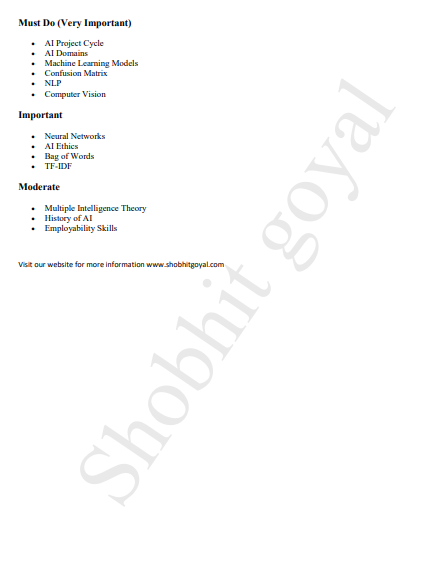
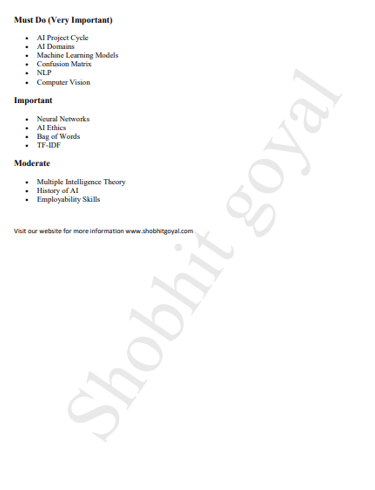
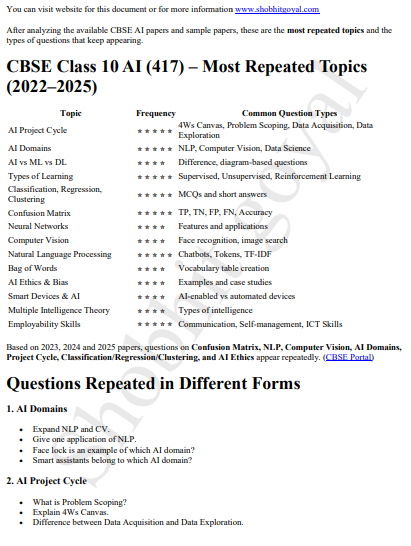
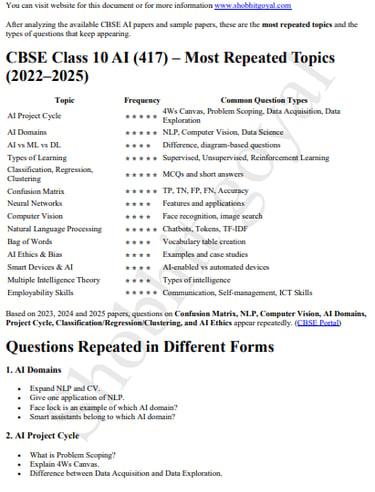
The curriculum for Artificial Intelligence (AI) for CBSE Class 10 has shown a noticeable pattern in the topics examined over the past few years, specifically from 2022 to 2025. Analyzing these repeated topics can provide invaluable insights for students preparing for their upcoming examinations in 2026-27. Understanding these topics not only aids in focused revision but also enhances familiarity with the exam structure and expectations.
One of the most frequently assessed areas is data handling and analysis. This topic includes crucial concepts such as data collection, data representation, and the interpretation of data sets. Students who invest time in mastering this area are likely to encounter a variety of questions revolving around these concepts, making it vital for exam success. Furthermore, machine learning basics have also emerged as a recurring theme. Understanding algorithms and how they function was emphasized in previous years, and students can expect similar interrogatives in future iterations of the examination.
Another significant topic that has been a staple in recent examinations is AI ethics. Questions surrounding the ethical implications of AI technologies and their societal impacts have gained prominence. These discussions not only enrich a student's knowledge base but also prepare them to engage in critical thinking, an increasingly valued skill in both academia and professional settings.
Lastly, the domain of project-based learning in AI is notably highlighted. Engaging in projects and case studies not only reinforces theoretical concepts but also provides practical experience, which is frequently examined through scenario-based questions. Thus, a thorough understanding of previously identified key topics can substantially increase a student's confidence and capability in addressing examination questions effectively.
Analyzing the patterns of questions in past examinations of CBSE Class 10 AI (417) reveals significant insights that can enhance students’ preparation strategies. Many concepts tested in the syllabus have appeared repeatedly, albeit in varied forms. This variation serves to assess not only students' understanding of the core concepts but also their ability to apply knowledge in a versatile manner. Recognizing these patterns can enable students to approach their studies more effectively.
For instance, consider the topic of data representation. In one exam, a question might ask students to explain the principles of binary search trees (BST) with a focus on advantages. In a subsequent exam, the same concept could be framed as a problem requiring students to visualize a BST for a given set of numbers. Although the core concept remains unchanged, the testing format requires different modes of engagement from the student, emphasizing comprehension as well as application.
Another common area of modification involves algorithms and their applications. Students may find questions structured as direct algorithmic processes one year and as case studies or situational problems the next. For example, a traditional question could simply ask for the step-by-step implementation of an algorithm. However, a refined version of the same concept could present a real-world scenario where students must choose and justify the algorithmic approach to solve a specific problem, thereby testing their understanding of practical applications.
This linguistic diversity in question formats presents an essential cue for students as they prepare for their examinations. By recognizing the similarities among differently phrased questions, students can cultivate a more robust grasp of fundamental concepts and develop versatile problem-solving skills. Hence, it is beneficial for students to engage with a variety of practice questions that reflect these modifications, ensuring a comprehensive understanding of the subject matter.
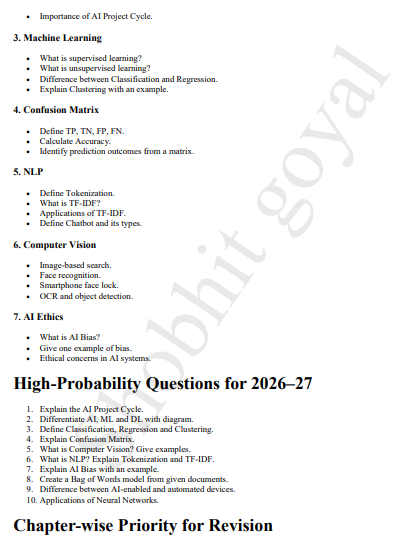
High-Probability Questions for 2026-27
As students prepare for the CBSE Class 10 Artificial Intelligence (AI) exam for the academic year 2026-27, analyzing previous years' question patterns is crucial to identify high-probability questions. Historically, certain topics have consistently appeared in the exams, signaling their importance and likelihood of recurrence. Students are encouraged to focus on key areas such as machine learning, data handling, and algorithms.
Based on past trends, questions related to the fundamental concepts of AI, such as defining artificial intelligence, its applications, and ethical implications, are expected to be significant. Additionally, students might encounter scenario-based questions that assess their understanding of algorithms and their application in problem-solving. For instance, a question may require students to devise an algorithm to solve a simple computational problem, allowing them to demonstrate practical knowledge.
Another area of focus should be data representation and visualization. Students should be prepared for questions on how to use various tools to visualize data effectively, as this is an essential skill in AI. Typical questions may ask for explanations of different types of graphs and charts, as well as their significance in interpreting data.
In terms of preparation tips, students are advised to engage with sample papers and previous years' question sets to gain familiarity with the question format and the types of inquiries posed. Creating a structured study schedule that emphasizes foundational concepts while incorporating practical applications through projects or case studies can enhance understanding. Collaborating with peers for group discussions on high-probability topics can also solidify knowledge and prepare students more comprehensively for the upcoming exam.
Chapter-wise Priority for Revision
In the curriculum for CBSE Class 10 Artificial Intelligence (AI), a thorough understanding of the subject is essential for effective preparation. This section aims to break down each chapter, ranking them by their importance and examination weightage, while also suggesting strategies for successful revision.
The first chapter, Introduction to AI, lays the foundational knowledge essential for all subsequent topics. It encompasses definitions, history, and applications of AI in various domains. Students are advised to create summary notes that capture the essence of each key concept, which aids memory retention significantly.
Following this, Data Handling and Visualization is a crucial segment that focuses on techniques to analyze and present data effectively. Given its relevance in real-world applications, prioritizing this chapter is wise. It is beneficial to practice through hands-on projects or use datasets for visualization tasks, enhancing comprehension through practical application.
The chapter on Machine Learning Basics deserves attention, given its increasing significance in the AI landscape. Students should engage with real-world examples and case studies to understand various algorithms and their function within this domain. Frequent revision and application through sample problems will help solidify these concepts.
In addition, the chapter focusing on Ethics in AI is becoming increasingly relevant. Revisiting case studies on ethical dilemmas faced in the AI field will foster critical thinking skills and a well-rounded view on technology implications.
Lastly, Future Trends in AI is forward-looking and engages students in considering potential career paths. To consolidate understanding, discussions or projects on emerging technologies can be initiated in study groups.
Through these chapter-wise priorities and targeted revision strategies, students can structure their study sessions to maximize their retention and understanding, ensuring they are well-prepared for the examination.
Study Strategies for Effective Preparation
Preparing for the Class 10 AI (417) exams requires a systematic and organized approach to ensure that students grasp the concepts effectively. One of the most important strategies is time management. Students should allocate specific time slots for studying each subject, particularly focusing on Artificial Intelligence. By creating a structured schedule, learners can maintain a balanced study routine, reducing the likelihood of last-minute cramming. It is advisable to incorporate short breaks to enhance concentration and retention of information.
Another beneficial strategy is the development of a well-rounded study plan. This plan should outline daily goals and topics to be covered, ensuring comprehensive coverage of the syllabus. Utilizing tools such as planners or digital calendars can help in visualizing one's study timeline. Students are encouraged to break down complex topics into smaller, manageable sections, allowing for thorough understanding and mastery.
Group study sessions can significantly enhance learning outcomes. Collaborative learning allows students to discuss concepts, quiz each other, and solve problems collectively, creating a richer understanding of the material. In addition, group discussions can help in identifying gaps in knowledge that an individual might overlook. When studying in groups, it is essential to stay focused and avoid distractions to maximize productivity.
Moreover, leveraging online resources can greatly aid in exam preparation. A variety of educational websites and platforms offer video tutorials, quizzes, and interactive learning modules specifically designed for Class 10 AI. Engaging with these resources can provide alternative explanations and examples that may resonate with different learning styles. Online forums can also serve as platforms to seek help from peers or educators, reinforcing difficult concepts.
In conclusion, a combination of effective time management, structured study planning, collaborative learning, and the use of online resources can significantly improve students' preparation for the Class 10 AI exams. By applying these strategies, students can build confidence and enhance their understanding of the subject matter.
Conclusion and Final Thoughts
In light of the information gathered, it is evident that certain topics in the CBSE Class 10 AI (417) syllabus have been repeatedly emphasized in previous examinations. These frequently asked questions provide a strategic advantage for students preparing for the 2026-27 academic year. By focusing on these high-probability subjects, learners can significantly enhance their performance and boost their confidence during examinations.
Understanding the significance of these repeated topics allows students to allocate their study time effectively, ensuring that they are well-prepared for questions that are likely to appear on the exam. A strategic approach to learning not only facilitates better retention of information but also helps in minimizing stress as students approach their assessments. Additionally, engaging with past examination papers can further solidify their grasp of these crucial concepts.
Students should remember that successful examination strategies extend beyond merely memorizing content; they also involve developing a comprehensive understanding of the subject matter and practicing application-based questions. This balanced approach fosters confidence in students, equipping them to handle various question formats that may arise during the actual exams.
In summary, as students embark on their preparation journey for the CBSE Class 10 AI (417) assessments, focusing on the most repeated topics and high-probability questions will serve as a cornerstone of their study strategy. By nurturing a proactive and confident mindset, learners can enhance their academic experience and achieve their desired outcomes in the upcoming academic year.
Contact
Let's connect and grow your digital presence.
Phone
info@shobhitgoyal.com
+918103354280
© 2025. All rights reserved.
UDYAM REGISTRATION NUMBER :- UDYAM-MP-49-0093568