World War III: Implications and Consequences
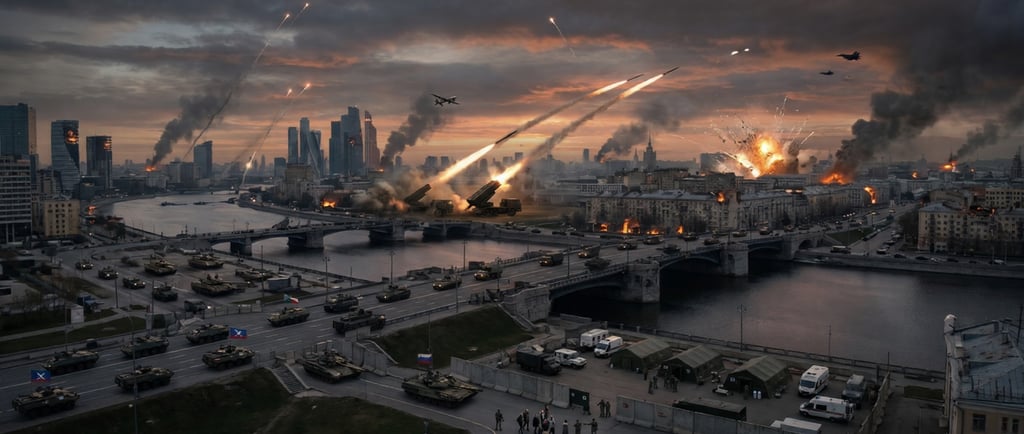
The term "World War III" evokes a variety of responses, ranging from fear to apprehension, reflecting the profound implications it carries. Essentially, World War III refers to a potential global conflict that could involve multiple nations and result in catastrophic consequences. In the modern era, the emergence of advanced military technology, geopolitical tensions, and economic disparities have amplified concerns about such a war. The historical context of previous world wars serves as a critical lens through which we can assess the implications of a potential third global conflict.
Shobhit Goyal
4/22/20268 min read
Introduction to World War III
The term "World War III" evokes a variety of responses, ranging from fear to apprehension, reflecting the profound implications it carries. Essentially, World War III refers to a potential global conflict that could involve multiple nations and result in catastrophic consequences. In the modern era, the emergence of advanced military technology, geopolitical tensions, and economic disparities have amplified concerns about such a war. The historical context of previous world wars serves as a critical lens through which we can assess the implications of a potential third global conflict.
Historically, the two major world wars of the 20th century, namely World War I and World War II, reshaped international relations and established a new world order characterized by alliances and rivalries. The outcomes of these wars laid the foundation for the geopolitical landscape we observe today. During World War I, the interplay of nationalism, imperial ambitions, and complex alliances culminated in a devastating conflict that changed the course of history. Similarly, World War II was ignited by unresolved tensions from its predecessor, resulting in even greater destruction and the formation of the United Nations in an effort to maintain global peace.
As the world progresses deeper into the 21st century, the prospect of a third world war appears increasingly plausible. With nations grappling with issues such as territorial disputes, cyber warfare, and rising populism, understanding the factors leading to conflict is vital. The lessons learned from past encounters continue to influence contemporary strategies and alliances. While current tensions may not guarantee a world war, the threat of escalation remains a pressing concern, necessitating a thorough examination of our global dynamics. As we explore the implications of this potential outbreak, it is critical to consider how history informs the possible narratives that might unfold in the future.
Triggers of World War III
The potential for a global conflict, such as World War III, can emerge from various critical triggers that reflect the state of international relations today. Political tensions rank among the foremost factors contributing to the risk of escalating hostilities. Disputes between major powers, particularly in regions like Eastern Europe, the South China Sea, and the Middle East, can rapidly evolve into broader confrontations. For instance, an ongoing standoff between NATO members and Russia regarding Ukraine illustrates how political maneuvering can raise alarm about potential escalations into a full-fledged war.
Economic crises also play a pivotal role in sowing discord among nations. As countries grapple with economic instabilities, the likelihood of conflict increases. The interconnectedness of economies today means that a recession in one region can ignite tensions globally. Supply chain disruptions, trade wars, and sanctions can lead to resentment and retaliatory actions, potentially spiraling into military confrontations. The recent energy crisis driven by geopolitical strife and its impact on global markets exemplifies how economic factors can intertwine with security concerns, exacerbating pre-existing conflicts.
Territorial disputes represent another significant driver of conflict. Areas such as the South China Sea, where multiple nations assert historical claims, are prone to militarization and confrontation. The assertion of sovereignty in these regions often involves not just national pride but strategic interests involving critical shipping routes and natural resources. The presence of military forces from competing nations in these territories increases the potential for miscalculations that could trigger simultaneous confrontations.
In conclusion, the landscape of international relations is fraught with political tensions, economic crises, and territorial disputes that collectively contribute to the looming specter of World War III. As global leaders navigate these complexities, the possibility of miscalculation remains a constant threat that necessitates vigilance and diplomacy to mitigate the risk of conflict on a global scale.
Countries Likely to Be Involved
The prospect of World War III draws attention to various nations that could potentially engage in conflict, particularly those with significant military capabilities and historical rivalries. At the forefront are the United States, Russia, and China, each wielding considerable influence on global affairs. Their actions and alliances can have significant repercussions in the event of a large-scale military conflict.
The United States is known for its extensive military infrastructure and commitment to global alliances, especially through NATO. However, deteriorating relations with strategic competitors like Russia and China could prompt military actions that align with national interests. The U.S. has a long history of involvement in international conflicts and often views its role as a global peacekeeper, yet it remains prepared for potential adversarial relationships that may arise.
Russia, with its historical narrative of confronting Western powers, possesses a robust military apparatus that includes nuclear capabilities. The current geopolitical environment is shaped by Russia’s assertive foreign policy and a willingness to exert its influence in regions like Eastern Europe and the Middle East. Past conflicts and territorial disputes, especially regarding Ukraine, underscore the potential for Russia’s involvement in a larger conflict.
China, as a rising economic and military power, presents a strategic challenge to both the United States and Russia. Its active territorial claims in the South China Sea and tense relations with neighboring nations, such as Taiwan, highlight its readiness to assert dominance. China’s growing alliances through initiatives like the Belt and Road further complicate the geopolitical landscape and may foster scenarios leading to conflict.
Other nations may also play significant roles. Countries like India, North Korea, and members of the European Union could find themselves entangled in a conflict, influenced by regional tensions, historical grievances, or economic interests. In a drastically changing global landscape, understanding these dynamics is crucial for anticipating potential scenarios that could culminate in a third world war.
Possible Scenarios and Outcomes
The potential outbreak of World War III shines a light on various scenarios that could drastically alter global dynamics. Each scenario carries unique implications and could emerge from the complex interplay of national interests, historical grievances, and regional tensions.
One plausible scenario involves conventional warfare, where nations engage in traditional military confrontations. In this context, multiple countries could find themselves in a large-scale conflict driven by territorial disputes, resource competition, or alliances. Conventional warfare could lead to a prolonged and costly engagement, impacting civilian populations and displacing millions. The humanitarian consequences and the potential for protracted conflict could create an urgent need for diplomatic resolutions, highlighting how vital international cooperation remains.
Another scenario to consider is nuclear engagement. As some countries possess nuclear arsenals, the threat of mutual assured destruction looms large in geopolitical considerations. A nuclear conflict would not only escalate the immediate crisis but also pose existential risks to humanity. The ramifications could include nuclear fallout, catastrophic loss of life, and environmental degradation far beyond the immediate combat zones. Furthermore, the fear of nuclear war may drive nations to adopt more aggressive postures, further destabilizing international relations.
Cyber warfare represents a more modern and increasingly relevant scenario. Nations can engage in digital attacks to undermine critical infrastructure, disrupt communications, and sway public opinion without physical confrontation. Such tactics can escalate tensions, provoke military responses, or manipulate economic systems, all of which carry serious implications for global stability. The anonymity and speed of cyber operations complicate responses, as nations may struggle to determine the responsible parties, potentially leading to miscalculations and unintended consequences.
In summary, the potential scenarios and outcomes of a global conflict highlight the complexity of modern warfare and the multifaceted challenges that could arise. Understanding these scenarios is essential for preparing effective strategies to promote peace and enhance global security in an increasingly interconnected world.
The Division of the World
The potential outbreak of World War III carries significant implications for how the world might be divided, both during and following the conflict. Geopolitical borders are likely to shift dramatically as nations re-evaluate their alliances and the balance of power evolves. Historical precedents suggest that conflicts of such magnitude often result in territorial realignments, as seen in the aftermath of the World Wars in the 20th century. Countries may find themselves absorbing former adversaries or, conversely, splitting apart to form new states based on ethnic or ideological lines.
The rise of new superpowers could be one of the most notable outcomes of this global conflict. Nations currently considered regional powers may emerge as global leaders, creating a new hierarchy in international relations. For instance, nations like India and Brazil could assert greater influence, while traditional powerhouses may experience a relative decline. This shift could lead to the formation of a multipolar world, where multiple nations vie for dominance, rather than the current unipolar or bipolar structures influenced by the United States and China.
Additionally, the potential for new alliances or factions to emerge cannot be overlooked. As nations realign their foreign policies in response to the ongoing conflict, we might witness the creation of formal and informal coalitions based on shared interests, security concerns, or ideological beliefs. These alliances could disrupt existing treaties, leading to a radically different framework of global governance. Historical patterns indicate that such factions could arise from ideological similarities, economic needs, or historical grievances, further complicating the post-war geopolitical landscape.
In conclusion, the probable divisions resulting from World War III will redefine relationships between countries, influence global governance, and alter the balance of power in significant ways. As nations reassess their positions, the world may witness a complex tapestry of alliances and rivalries shaping the international order for years to come.
Humanitarian Impact of a Global War
The implications of a global conflict, such as a potential World War III, extend deeply into humanitarian crises that jeopardize civil society and human life. As historical precedents have shown, large-scale wars often result in mass displacement of populations, leading to refugee crises that strain the resources of neighboring countries and international bodies. The United Nations High Commissioner for Refugees (UNHCR) has repeatedly highlighted that conflict zones can trigger significant migrations, causing people to flee their homes in search of safety, which often leads to overcrowded shelters and insufficient basic services.
In conjunction with displacement, the casualties associated with global warfare can reach catastrophic numbers. Not only do military personnel face the threat of injury and death, but civilian populations also encounter indiscriminate violence and peril. The toll on civilian lives creates a ripple effect, disrupting education, healthcare, and economic stability within affected regions. This disruption can lead to long-term psychological trauma and societal breakdown, impacting generations to come. Countries that grapple with these repercussions often find themselves in a cycle of poverty and instability, hampering their recovery.
The strain on public health systems is another critical consequence during and after a global conflict. Health facilities may be overwhelmed by the influx of casualties, exacerbating existing diseases and healthcare deficiencies. Furthermore, wars can lead to the breakdown of sanitation and access to clean drinking water, raising the risk of pandemics. The repercussions on global health can persist for years, as diseases may spread across borders with ease, challenging international security. Global health systems, already fragile due to localized conflicts, could face an insurmountable burden following a widespread military engagement, leading to a significant loss of life and societal stability.
Conclusion and Future Outlook
As we delve into the potential outbreak of World War III, it is essential to consider the various geopolitical tensions, historical precedents, and the evolution of global relations presented in this discourse. The propensity for conflict escalates when nations misinterpret each other's intentions or fail to appreciate the implications of their own actions. The lessons learned from earlier global conflicts highlight a crucial necessity for open communication and diplomacy. Historical episodes remind us that a miscalculated move or a breakdown in dialogue can lead to unintended and catastrophic consequences.
Moving forward, nations must engage in proactive strategies aimed at conflict prevention. This involves utilizing diplomatic channels more effectively, fostering multilateral relationships, and participating in international organizations that promote peace and collaboration. The presence of shared challenges, such as climate change and economic instability, can act as a unifying factor, motivating countries to work together rather than engage in hostilities. Developing frameworks for conflict resolution is imperative; countries must prioritize negotiation over aggression.
Furthermore, the influence of social media and rapid information dissemination cannot be overlooked. States should be vigilant against misinformation campaigns that may exacerbate tensions. Cybersecurity and the safeguarding of national narratives must become central to national policies to ensure that misunderstandings do not escalate into violent confrontations. The cooperation between nations, especially in spheres such as trade, environmental issues, and humanitarian efforts, may act as a stabilizing force.
In conclusion, while the specter of World War III looms ominously, there exists a pathway to a more peaceful world. By learning from the past, nations can adopt more enlightened strategies, thereby fostering an environment that emphasizes understanding and cooperation over conflict. Embracing unity in the face of diversity may hold the key to averting a global catastrophe.
Contact
Let's connect and grow your digital presence.
Phone
info@shobhitgoyal.com
+918103354280
© 2025. All rights reserved.
UDYAM REGISTRATION NUMBER :- UDYAM-MP-49-0093568