India vs Pakistan: Cricket's Ultimate Rivalry
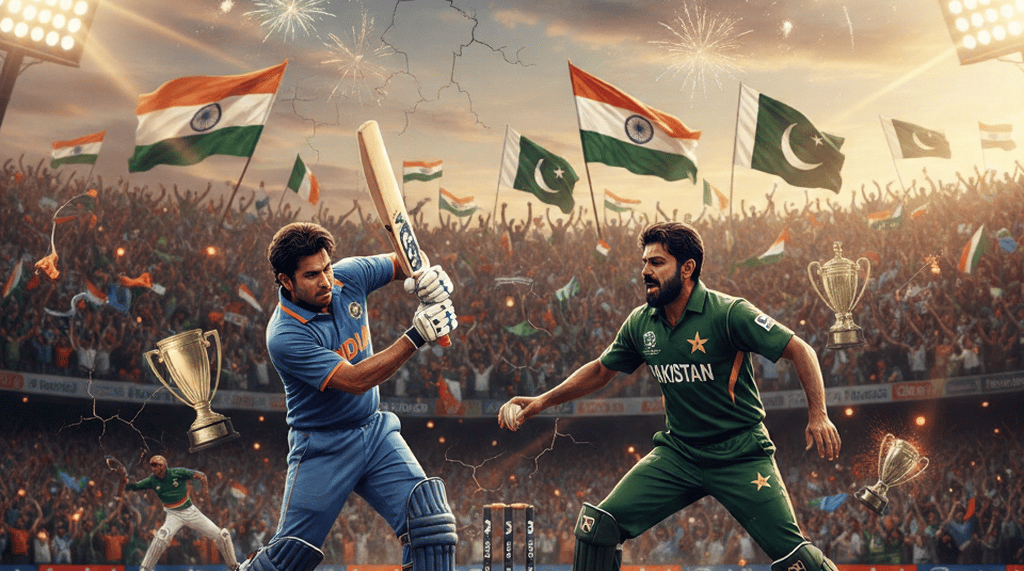
The cricket rivalry between India and Pakistan signifies more than just a game; it is a potent symbol of national pride and identity for both nations. Rooted in the historical context surrounding the partition of British India in 1947, this rivalry has grown into one of the most intense and anticipated sporting contests in the world. The partition not only divided the subcontinent geographically but also left deep emotional scars, establishing a framework of mutual suspicion and rivalry that has permeated various aspects of life in both countries.
Shobhit Goyal
2/13/20268 min read
Introduction to the Rivalry
The cricket rivalry between India and Pakistan signifies more than just a game; it is a potent symbol of national pride and identity for both nations. Rooted in the historical context surrounding the partition of British India in 1947, this rivalry has grown into one of the most intense and anticipated sporting contests in the world. The partition not only divided the subcontinent geographically but also left deep emotional scars, establishing a framework of mutual suspicion and rivalry that has permeated various aspects of life in both countries.
Cricket emerged as a unifying force that transcended the political and cultural tumult following partition. For many fans, matches between India and Pakistan are a platform to express nationalistic sentiments, which often heighten the emotional investment in the game. Each encounter on the cricket field becomes a reflection of deeper societal sentiments, echoing a complex history filled with both shared cultural elements and stark differences. Thus, the cricket pitch serves as a battleground where rivalries are played out, with each wicket fallen, each run scored, reverberating beyond sports into the national consciousness.
The impact of cricket extends into multiple facets of life, influencing diplomatic relations and social interactions. Sporting events have, at times, provided a rare opportunity for people from both nations to find common ground, albeit temporarily. However, they have often been marred by tensions arising from political disagreements and historical grievances. As a result, each cricket match invites not only the excitement of competition but also the weight of historical significance. This complex interplay of emotions, politics, and national pride continually shapes the India vs Pakistan cricket rivalry, making it a compelling phenomenon that draws millions of viewers and sparks intense discussions.
Historic Milestones
The rivalry between India and Pakistan in cricket is not just a contest of athletic prowess; it is charged with historical significance, political tensions, and cultural undercurrents. The first major milestone in this intense rivalry occurred in 1952 when India achieved its first Test victory over Pakistan in New Delhi. Led by Captain Lala Amarnath, this match marked the start of a competitive relationship that would evolve over the decades.
As the years progressed, several matches became pivotal in defining the rivalry. One of the most notable encounters occurred during the 1987 World Cup in Bangalore. This match is still fondly remembered for the electric atmosphere and dramatic turn of events. India set a formidable target of 256 runs, and although Pakistan put up a valiant effort, they fell short by 39 runs, marking a significant win for India in a high-pressure game.
Statistically, the rivalry can be evaluated through various performance metrics. In One Day Internationals (ODIs), as of 2023, India leads the head-to-head record, highlighting its dominance in this format, particularly during World Cups. Key moments, such as Sachin Tendulkar's aggressive innings or intense bowling battles, have become folklore among fans and players alike. In addition, pivotal matches, such as the 2003 World Cup final where India faced Pakistan, have added layers to the narrative of this cricketing rivalry.
Over the years, both teams have had their share of victories and defeats; however, each match tends to surpass the last in terms of dramatic tension and fan engagement. The shared history fueled by memorable performances, heartbreaking losses, and nail-biting finishes continues to resonate deeply within the cricketing community, making each encounter a monumental event that garners attention worldwide. The historical milestones not only reflect the evolution of the teams but also encapsulate the emotional ties that fans have forged through years of competition.
Recent Performances and Trends
The cricketing rivalry between India and Pakistan has always captivated fans around the globe, showcasing dramatic encounters that go beyond mere statistics. Recent matches between these two teams reflect notable tactical advantages for India, countered by Pakistan's unwavering resilience. In the shortest formats, India has displayed superior batting depth and strategic acumen, often leading to victories in T20 encounters. For instance, in the 2021 T20 World Cup, India's batting lineup outperformed Pakistan's bowling, ensuring a dominant victory.
When examining One Day Internationals (ODIs), it is evident that India holds a favorable record against Pakistan, particularly in World Cups. The 2019 ICC Cricket World Cup saw India registering a comprehensive win in a high-pressure match, underlining their ability to thrive on the grand stage. However, Pakistan has had moments of brilliance, such as their unexpected victory in the 2017 Champions Trophy final, demonstrating that they can never be counted out.
Statistically, India's edge in recent matches can be attributed to their balanced team composition and strategic gameplay, particularly in high-stakes scenarios. Yet, Pakistan's ability to rise to the occasion and perform exceptionally under pressure cannot be overlooked. Players like Shaheen Afridi and Babar Azam have shown impressive performances, highlighting Pakistan's capacity to challenge India's dominance. Moreover, analyzing trends over the years reveals a shifting dynamic, with Pakistan frequently upsetting the odds, proving that the rivalry remains fiercely competitive.
To conclude, while India has enjoyed a more successful streak in terms of raw numbers, the emotional intensity and unpredictable nature of matches between India and Pakistan ensures that the cricketing world remains on edge whenever these two teams face off. The rivalry continues to evolve, promising thrilling encounters for fans in the future.
Iconic Players and Their Impact
Throughout cricket history, the rivalry between India and Pakistan has been marked by legendary players whose performances have defined eras and elevated the sport. Two of the most iconic figures in this context are Sachin Tendulkar and Wasim Akram, each representing their nation with unmatched prowess.
Sachin Tendulkar, often regarded as the greatest batsman of all time, has an illustrious record against Pakistan. He has amassed over 18,000 runs in One Day Internationals (ODIs), and his innings of 134 runs in the 2004 Multan Test not only led India to a memorable victory but also showcased Tendulkar's ability to handle pressure. His rivalry with Akram was a spectacle, with Akram’s swing bowling challenging Sachin's technique and temperament, encapsulating the essence of India-Pakistan clashes.
On the bowling side, Wasim Akram is considered one of the finest fast bowlers in cricket history. His exceptional ability to reverse swing the ball made him a formidable opponent. Notably, his figures of 3 wickets for 55 runs during the 1996 World Cup match against India highlighted his importance in crucial encounters. The Akram-Tendulkar duels became not just battles between nations but also individual contests that drew cricket fans' attention globally.
Moreover, the emergence of newer stars like Virat Kohli has continued to fuel this rivalry. Kohli's aggressive batting style and consistency have seen him excel in high-pressure situations, including his unbeaten 183 during an ODI in 2017 against Pakistan. His performances have not only led India to victories but have also cemented his place among cricketing greats, further deepening the narrative of individual excellence amid national pride.
These iconic players have not only contributed to their teams' successes but have also significantly influenced the lasting legacy of the India-Pakistan cricket rivalry, setting benchmarks for future generations.
The Cultural Significance
The cricket rivalry between India and Pakistan holds profound cultural significance, transcending mere competitive sport to embody national identity and unity. This rivalry is more than just a game; it is a vivid illustration of historical ties, shared traditions, and collective aspirations. Every match between these two cricketing giants serves as an emotional touchpoint for millions, offering a platform where pride for one’s nation is passionately expressed.
In India, cricket is often perceived as a religion, and victories against Pakistan are seen as a source of national pride, reinforcing a sense of unity among diverse communities. The fervor surrounding these matches unites individuals across various demographic divides, fostering a collective spirit. Similarly, in Pakistan, the anticipation and subsequent celebration or lamentation surrounding a cricket game can significantly influence social interactions, bringing families and friends together, regardless of their everyday differences.
The significance of this rivalry is also mirrored in the media, where coverage of matches featuring India and Pakistan often dominates news cycles. This not only amplifies public sentiment but also shapes cultural narratives, influencing perceptions that extend beyond cricket. Sports journalists and commentators frequently emphasize the emotional landscape that these matches evoke, linking them to broader socio-political contexts and historical events that have shaped both nations.
Moreover, the outcomes of these matches can impact public sentiment significantly, sometimes leading to heightened nationalism. The emotional responses that such encounters elicit illustrate how deeply ingrained cricket is in the cultural fabric of both countries. Through victories and losses, cricket provides a medium through which identity and national pride are showcased, making this rivalry an indelible aspect of the socio-cultural landscape in India and Pakistan.
Fan Culture and Spectacle
The encounters between India and Pakistan on the cricket field are more than just mere competitions; they represent intense, multifaceted cultural spectacles that evoke a deep emotional response from fans. The fervor surrounding these matches is palpable, driven by historical tensions and national pride. Cricket enthusiasts gather in vast numbers, often donning team jerseys, waving flags, and engaging in chants that echo through stadiums and public gatherings. The atmosphere during these games is electrifying, often described as "a festival of cricket," where unity and rivalry coexist in a celebration of sport.
Memorable moments are etched in the minds of fans, such as India’s dramatic victories or Pakistan’s stunning upsets. The iconic four or six, a spectacular catch, or a nail-biting last over can instantly transform a match into folklore. For instance, India’s victorious chase in the 2007 T20 World Cup’s final or Pakistan's win in the 2017 Champions Trophy Final are events that fans recount with pride, further fueling inter-country rivalries. These feats do not merely signify triumph but become part of the narrative that fans passionately share.
Moreover, social media has played a transformative role in amplifying fan experiences surrounding these matches. Platforms like Twitter, Instagram, and Facebook offer instant commentary, meme sharing, and live reactions that allow fans to express their emotions and connect with like-minded individuals across borders. This online engagement often leads to a shared, global appreciation for the rivalries, heightened anticipation, and post-match discussions that can last for days. The digital landscape acts as both a stage and a community center, transforming spectators into part of a larger conversation about cricket’s impact on culture and identity.
Future of the Rivalry
The rivalry between India and Pakistan in cricket has evolved into one of the most compelling narratives in the sport, captivating millions of fans globally. As we gaze into the future of this intense competition, several factors come into play that could shape its trajectory. The potential for growth in this rivalry is significant, especially considering the increasing popularity of cricket in both countries and around the world. With the rise of new formats like T20 leagues alongside traditional formats, there is ample opportunity for this rivalry to expand beyond bilateral series, introducing fresh excitement through franchise-based competitions.
However, the cricketing landscape is not without its challenges. Political tensions between India and Pakistan often cast a shadow over the sports domain, making it difficult to organize international matches. These tensions could hinder the flow of matches, resulting in sporadic encounters that could dampen the competitive spirit. As both nations find themselves navigating complex global relationships, the cricket boards will need to prioritize dialogue and diplomacy to facilitate matches that fans eagerly anticipate.
Moreover, the evolution of fan engagement will also play a critical role in the future of this rivalry. Social media platforms provide fans with real-time interaction, giving them a voice and allowing them to share their passion and fervor. The growing presence of digital content and the ability to connect with players directly could further enhance the experience of following this rivalry. As fans become more engaged, the stakes of each match could rise, augmenting the significance of the rivalry. Overall, the future of the India-Pakistan cricket rivalry will be a combination of opportunities and challenges, underscoring the need for adaptability and understanding that the stakes extend beyond sport into cultural identities, making this rivalry ever more intriguing as it unfolds.
Contact
Let's connect and grow your digital presence.
Phone
info@shobhitgoyal.com
+918103354280
© 2025. All rights reserved.
UDYAM REGISTRATION NUMBER :- UDYAM-MP-49-0093568