The Reality of the Indian Education System: Challenges and Opportunities for Students
The Indian education system is one of the largest and most complex in the world, serving over 1.5 million schools and more than 30 million students at the higher education level. It is structured into several major components, which include primary, secondary, and higher education. The system has undergone significant transformations and reforms since India gained independence in 1947, evolving to meet the changing needs of a diverse population.
Shobhit Goyal
2/13/20268 min read
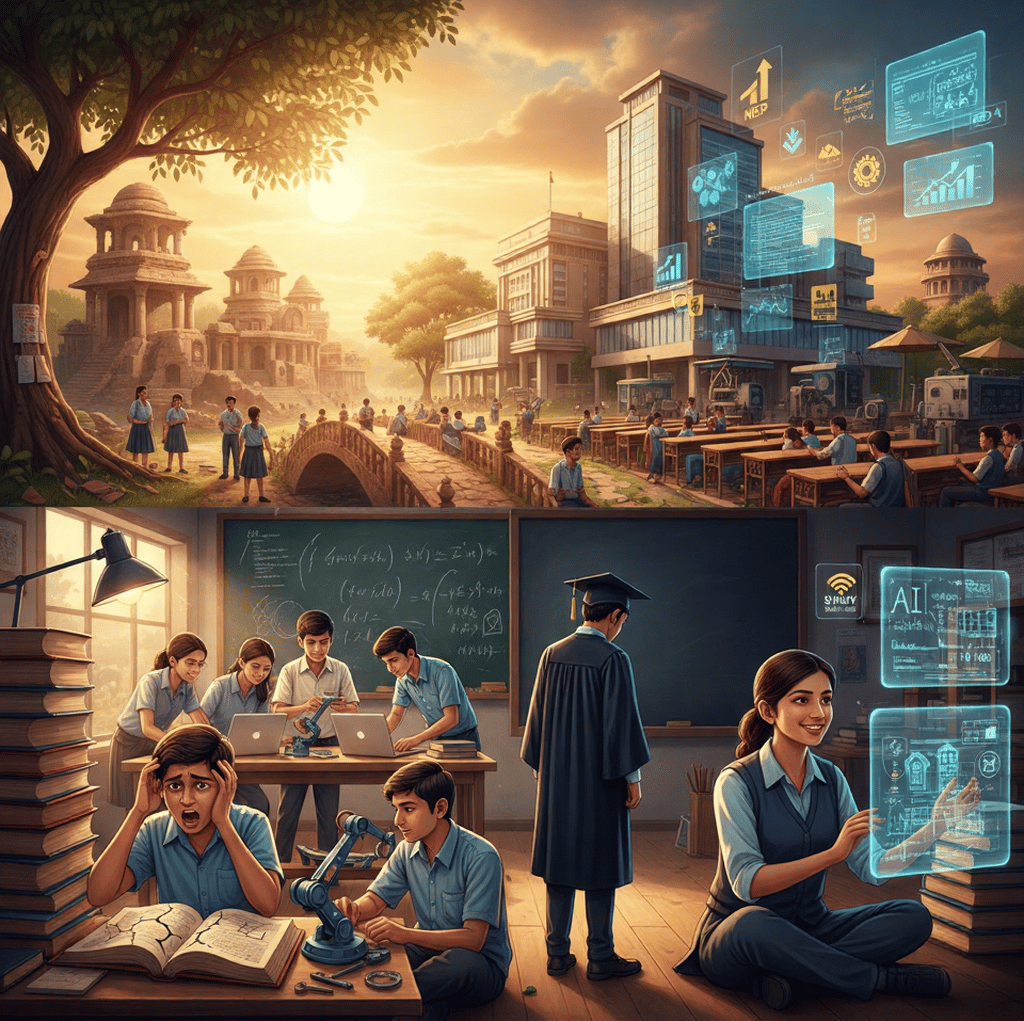
Introduction to the Indian Education System
The Indian education system is one of the largest and most complex in the world, serving over 1.5 million schools and more than 30 million students at the higher education level. It is structured into several major components, which include primary, secondary, and higher education. The system has undergone significant transformations and reforms since India gained independence in 1947, evolving to meet the changing needs of a diverse population.
Primary education in India is designed for children aged 6 to 14 and is considered a fundamental right under the Right to Education Act, which was enacted in 2009. This stage is critical for laying the groundwork for literacy and numeracy skills among students. Following primary education, students advance to secondary education, which further includes classes 9 to 12. Here, students are introduced to a broader curriculum that offers various subjects, allowing them to specialize in streams such as Science, Commerce, or Humanities.
Higher education in India has expanded rapidly over the past few decades, with an increasing number of universities and colleges offering diverse programs. This stage is pivotal for students aiming to pursue careers in fields such as engineering, medicine, commerce, and the arts. The aspirations of students within this educational framework often revolve around attaining higher academic qualifications, which in turn are intimately linked to career opportunities in a competitive job market.
The significance of education in shaping a student's future cannot be overstated. It plays a crucial role in personal and professional development, equipping individuals with essential knowledge and skills necessary for success. As the Indian education system continues to evolve, understanding its structure and components is vital for addressing the challenges it faces and leveraging the opportunities it presents for students.
The current state of unemployment among graduates in India is a pressing issue that deserves careful examination. Recent statistics indicate that the unemployment rate for graduates has been alarmingly high, hovering around 47% according to various reports. This figure reflects a significant gap between the number of educated individuals entering the workforce and the available job opportunities. The economic repercussions of this disparity are profound, not only affecting individual aspirations but also hindering national progress.
Several factors contribute to this phenomenon of rising unemployment rates among educated youth. One primary reason is the mismatch between the skills acquired during academic studies and those required by employers. Many degree programs do not adequately prepare students for the practical demands of the workforce. Consequently, graduates often find themselves ill-equipped to meet the expectations of potential employers.
Additionally, the Indian job market is becoming increasingly competitive. With a growing number of institutions offering degrees, the supply of graduates far outstrips the demand for jobs in many sectors. For instance, a recent case study highlighted the struggle of a management graduate who spent over eight months searching for a suitable job, only to accept a position that was unrelated to his field of study. Stories like this illustrate a broader trend where many graduates are forced to compromise on their career aspirations due to a lack of suitable employment opportunities.
Moreover, sector-specific downturns and economic challenges exacerbate the scenario. Industries such as manufacturing and information technology, which traditionally offered numerous job prospects, have seen fluctuations that have led to hiring freezes or layoffs. Thus, the reality of unemployment among graduates in India is a multifaceted challenge that requires attention from both educators and employers to ensure a more harmonious alignment between education and employment opportunities.
Loopholes in the Education System
The Indian education system, despite its vastness and diversity, faces numerous challenges that hinder its effectiveness. One significant loophole is the prevalence of rote learning among students. This method emphasizes memorization over understanding, leading students to achieve high scores without grasping the underlying concepts. For instance, students often memorize formulas in mathematics or historical dates rather than comprehending their applications. As a result, this approach impedes critical thinking and the ability to apply knowledge in real-world situations.
Furthermore, there is a considerable lack of practical knowledge in the Indian curriculum. Many students graduate with theoretical expertise yet possess limited skills that are applicable in the job market. A report by the National Employability Survey notes that only a small percentage of graduates are deemed employable, pointing to the disconnect between academic learning and practical application. This gap suggests that the emphasis on theoretical knowledge must be balanced with hands-on experiences to prepare students adequately for future careers.
Inadequate career counseling further exacerbates the issues within the education system. Many students are left to make crucial decisions regarding their education and careers without sufficient guidance. A survey conducted by the Education Ministry revealed that a significant proportion of students are unaware of various vocational and alternative career paths. This lack of information can lead to misguided choices that do not align with a student’s strengths or interests.
Lastly, outdated curricula contribute to the inefficiencies within the education system. With rapid technological advancements and shifts in the global economy, the current curriculum often fails to equip students with relevant skills. It is crucial for educational authorities to regularly revise and update curricula to reflect contemporary knowledge and industry needs, thereby creating a more adaptive education framework.
The Pursuit of Shortcuts Among Students
The mindset among students that favors shortcuts in their educational journey is a growing concern within the Indian education system. This trend often stems from multiple factors, including societal pressures and high parental expectations. Many students find themselves in a competitive environment where the emphasis on grades and performance overshadows the importance of genuine learning. As a result, the focus shifts towards merely 'passing' exams rather than truly acquiring knowledge and skills.
This phenomenon can be attributed to the relentless pursuit of academic excellence, driven by the belief that high scores equate to future success. Students often resort to various shortcuts, such as rote learning, using unauthorized resources, or relying on last-minute preparations, to cope with these pressures. While these tactics may yield short-term results, such as passing an examination, they do not equip students with the critical thinking and problem-solving abilities necessary for the real world. This disparity is concerning, as it undermines the educational foundation that students need to navigate complex challenges in their future careers.
Furthermore, this shortcut mentality can result in a skewed understanding of education's purpose. Students may become more focused on accumulating degrees and certifications rather than developing a deeper appreciation for the subjects they study. This mindset not only impacts individual learning experiences but also poses a broader challenge to the integrity and efficacy of the education system as a whole. Consequently, reforming this perspective is crucial for cultivating a generation that values knowledge acquisition over mere transactional success.
The Rise of Skill-Oriented Students
In recent years, there has been a noticeable shift among students within the Indian education system towards skill-oriented learning. Unlike previous generations that primarily focused on traditional academic subjects, today's students are increasingly embracing the importance of developing practical skills relevant to the evolving job market. This emphasis on skill acquisition serves not only to enhance employability but also to foster personal growth and creativity.
Various programs and initiatives have emerged to support this trend, exemplifying the positive changes taking place. For instance, numerous vocational training institutes have gained popularity, offering specialized courses that equip students with hands-on experience in fields such as information technology, manufacturing, healthcare, and hospitality. These programs emphasize real-world applications, allowing students to graduate with a valuable skill set that meets industry expectations.
Success stories of various individuals illustrate the impact of this skill-oriented approach. Students who have participated in skill-based workshops and internships often showcase enhanced confidence and competence when entering the professional world. For example, initiatives like Pradhan Mantri Kaushal Vikas Yojana aim to promote skill development across different sectors, transforming students into job-ready candidates who contribute positively to the economy.
This transformation in focus is not limited to vocational training alone; educational institutions also recognize the necessity of integrating skill training within their curricula. With an increasing emphasis on entrepreneurship and innovation, many universities are fostering a culture of creativity and collaboration, encouraging students to pursue projects that align with their interests and career goals. By nurturing these skills, educational institutions are helping students to develop a multi-faceted understanding of their disciplines.
Ultimately, the rise of skill-oriented students represents a crucial paradigm shift in the Indian education landscape. As this trend gains momentum, it is likely to empower future generations to engage confidently in a competitive job market, thereby unlocking new opportunities for personal and professional success.
The Importance of Grades vs. Skills
In the current educational landscape of India, the emphasis on grades has become a hallmark of academic achievement. Students often find themselves in a relentless pursuit of high scores, driven by the belief that grades serve as a decisive factor in determining future opportunities. However, this fervor for marks can sometimes eclipse the fundamental importance of developing practical skills necessary for success in both competitive exams and the workforce.
Grades typically act as a quantifiable measure of a student's performance, painting a picture of academic proficiency. Yet, it is crucial to recognize that these numerical values do not always encapsulate a learner's capabilities or potential. Skills such as critical thinking, problem-solving, communication, and adaptability are equally, if not more, significant in today’s dynamic environment. Unfortunately, students might prioritize rote memorization and examination techniques at the expense of honing these vital skills.
To achieve a holistic educational experience, students must strive to strike a balance between their quest for academic excellence and the cultivation of essential skills. Engaging in practical projects, internships, and soft skill workshops can enhance their preparedness for real-world challenges. Additionally, educators and institutions should create a conducive environment that values skill acquisition alongside traditional grading metrics. This dual focus can better equip students to address complex problems and thrive in a competitive workforce.
Ultimately, the challenge lies in reshaping perceptions around education. By recognizing that skills and grades are not mutually exclusive but rather complementary aspects of learning, students can foster a more comprehensive and rewarding educational journey. Embracing this balance will empower future generations to become adept professionals, ready to navigate and contribute to rapidly changing landscapes.
Possible Solutions and Future Directions
The Indian education system, while rich in diversity and potential, faces numerous challenges that necessitate strategic reforms and innovative solutions. One of the primary solutions lies in reforming curricula to ensure they remain relevant to the needs of both students and the evolving job market. Educational institutions should emphasize competency-based curricula that is aligned with industry requirements, thereby preparing students not only academically but also professionally.
Vocational training presents another essential avenue for improvement. By expanding vocational education programs, students can acquire practical skills and gain experience in various trades. Such initiatives would empower students to pursue alternate career paths that are often undervalued in traditional academic settings, enhancing their employability and overall satisfaction.
Moreover, mentorship programs can significantly aid in bridging the gap between theoretical knowledge and practical application. Engaging professionals from relevant fields as mentors can provide students with guidance and insights essential for their personal and professional development. This approach not only facilitates greater understanding of career options but also fosters networking opportunities that can lead to internships and jobs.
Lastly, adopting a holistic approach to education that values both academic excellence and practical skills is crucial. This can be achieved by incorporating extracurricular activities, life skills training, and emotional intelligence development into the educational framework. Schools must cultivate an environment that promotes creativity, critical thinking, and collaboration, equipping students to navigate the complexities of the modern world.
As we contemplate the future of the Indian education system, it is clear that tackling these issues will require a collaborative effort among governments, educational institutions, and industry stakeholders. Only through thoughtful reforms and a commitment to continuous improvement can we cultivate a generation of learners who are not just academically successful but also prepared for the challenges of the 21st century.
Contact
Let's connect and grow your digital presence.
Phone
info@shobhitgoyal.com
+918103354280
© 2025. All rights reserved.
UDYAM REGISTRATION NUMBER :- UDYAM-MP-49-0093568