Understanding the Examination System in India: Conducting Exams, Challenges, and Solutions
The examination system in India is a cornerstone of the educational landscape, holding great significance in determining the academic and vocational trajectory of students. This structured assessment framework encompasses a variety of examinations tailored for different educational levels, from primary school assessments to national-level entrance tests for higher education institutions. These examinations often play a critical role in shaping students' careers and futures, by providing pathways to prestigious colleges and esteemed job opportunities.
Shobhit Goyal
2/13/20267 min read
Introduction to the Exam System in India
The examination system in India is a cornerstone of the educational landscape, holding great significance in determining the academic and vocational trajectory of students. This structured assessment framework encompasses a variety of examinations tailored for different educational levels, from primary school assessments to national-level entrance tests for higher education institutions. These examinations often play a critical role in shaping students' careers and futures, by providing pathways to prestigious colleges and esteemed job opportunities.
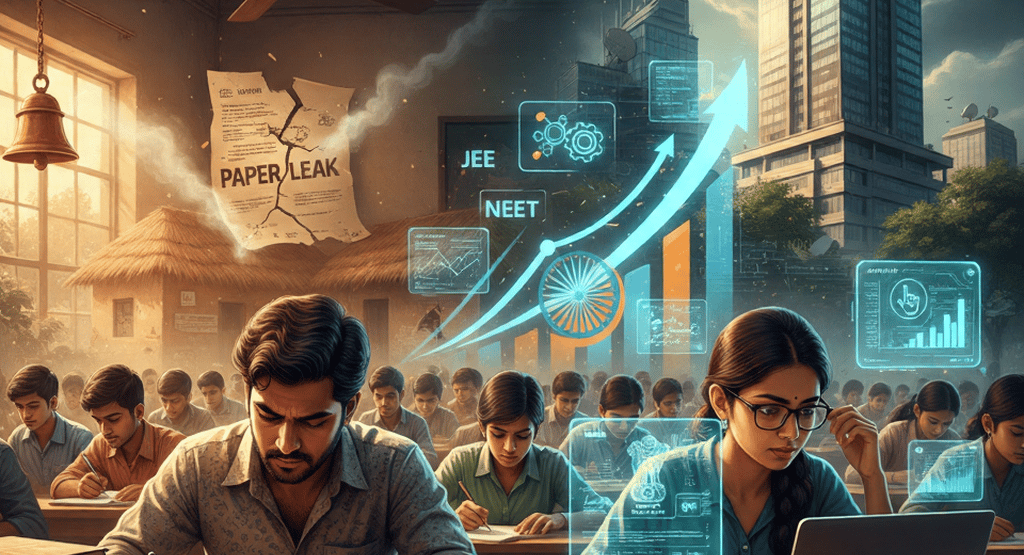
Across different stages of education, students in India encounter numerous tests; these include board examinations for secondary school completion, university entrance tests like the Joint Entrance Examination (JEE) for engineering aspirants, and the National Eligibility cum Entrance Test (NEET) for medical students. Additionally, various competitive exams are conducted at state and national levels for employment in government sectors, catering to a wide range of professions. This comprehensive examination system ensures that students are evaluated rigorously, allowing them to demonstrate their knowledge and skills in relevant subjects.
In recent years, there has been a marked transition towards online examination formats, prompted by advancements in technology and further accelerated by the global pandemic. Online exams present several benefits including accessibility, efficiency, and the potential for immediate results, thereby transforming how examinations are conducted. Despite the convenience of digital assessments, the traditional physical examination methods continue to hold a significant place in the system, as many learners still prefer the conventional approach due to its familiarity and perceived fairness.
Steps Involved in Conducting Examinations Online and Offline
Conducting examinations is a complex process that requires careful planning and execution, whether in an online environment or a traditional physical setting. To ensure that examinations adhere to academic standards and regulations, several systematic steps are commonly followed.
The first phase involves the planning stage, where examination boards establish clear objectives and define the scope of the examination. This includes integrating curriculum objectives and setting parameters for assessment. During this phase, stakeholders such as educators, administrators, and technology experts collaborate to design examination frameworks that meet educational needs.
Next, scheduling is essential for both online and offline examinations. Proper scheduling involves determining the relevant dates and times while considering candidates' availability and institutional constraints. It is vital to communicate these details effectively to all parties involved, ensuring participants have adequate time to prepare.
Setting up infrastructure is a crucial step. For offline exams, this includes securing venues, arranging seating, and ensuring that examination materials are readily accessible. In an online setting, technological infrastructure must be established, including reliable internet connectivity, secure servers, and user-friendly interfaces. Furthermore, implementing secure login procedures is paramount to protect the integrity of the examination.
Preparing examination content encompasses creating or curating questions that align with learning objectives and maintain fairness and validity. Additionally, examination boards must consider accessibility to accommodate diverse learner needs, particularly in online environments where varying levels of technological proficiency may exist.
Finally, executing the examination involves monitoring the process to uphold standards. Offline examinations require invigilators to enforce rules, while online exams often necessitate real-time monitoring through technology to prevent malpractice. Proper feedback mechanisms should be established post-examination to analyze the process and identify areas for improvement.
Advantages and Disadvantages of Examinations
Examinations serve as a significant method of assessment within the educational framework in India, presenting both advantages and disadvantages. One of the primary advantages of examinations is that they promote discipline and encourage students to engage in focused study. The structured nature of exam preparation necessitates a comprehensive review of the subject matter, which can aid in knowledge retention and mastery of the curriculum. Through regularly scheduled exams, students are motivated to manage their time effectively, cultivate study habits, and adhere to deadlines, which can be highly beneficial in both academic and future professional contexts.
Furthermore, examinations provide a standardized measure of a student's understanding of the material. This uniformity ensures fairness in assessment, allowing educators to evaluate learning outcomes consistently across various educational institutions. Consequently, exams can serve as a diagnostic tool, identifying areas where students may require additional support. This aspect is particularly crucial in a diverse educational landscape, where students may come from varied socio-economic backgrounds and possess different levels of prior knowledge.
However, the disadvantages of examinations cannot be overlooked. High-stakes testing often leads to significant stress and anxiety among students. The pressure to perform well in exams can result in mental health issues, adversely affecting overall academic performance and learning enthusiasm. Additionally, the focus on rote learning in many examination systems can hinder the development of critical thinking and problem-solving skills. Students may prioritize memorization of information over true comprehension of concepts, leading to irregularities in the learning process.
Ultimately, while examinations can enhance discipline and knowledge retention, they also pose challenges such as increased stress and reliance on rote learning. A balanced perspective is essential to address these issues and improve the educational assessment landscape in India.
Addressing Examination Paper Leaks: Procedures and Responses
Examination paper leaks represent a significant challenge to the integrity of the examination system in India. Instances of such leaks have occurred across various educational boards and levels, raising serious concerns regarding the credibility of the assessment process. Historical cases, including the infamous leak of the Class 10 Mathematics paper in 2018, demonstrated how leaks not only undermine academic standards but also create an environment of distrust among students, educators, and the public at large.
The implications of examination paper leaks are profound. They compromise the fairness of examinations, giving an undue advantage to some candidates while disadvantaging others. As a result, several educational boards and conducting bodies have adopted stringent security measures to mitigate the risk of such occurrences. These measures include the use of advanced technology, such as encrypted question papers and secure digital delivery systems, that restrict unauthorized access to examination materials.
When a leak is suspected or identified, protocols are set in motion to address the situation promptly. Investigative teams are established to ascertain the source of the leak, and rigorous inquiries are conducted to hold those responsible accountable. This could involve collaborating with law enforcement agencies to track down individuals involved in the breach. In parallel, measures to ensure continuity in the examination process are established, which may include setting alternative papers or rescheduling exams to uphold the examination's integrity.
Preventive strategies also play a vital role in safeguarding against future leaks. Educational boards are increasingly investing in training their staff, enhancing security at examination centers, and implementing strict protocols for paper handling and distribution. Through these collective efforts, authorities are making significant strides in addressing the issue of examination paper leaks, endeavoring to restore faith in the examination system and uphold rigorous academic standards.
Types of Examinations in India: From Entry-Level to High-Level Posts
In India, the examination system is diverse and serves various purposes, ranging from the recruitment of government personnel to admitting students into prestigious educational institutions. Examinations can be broadly categorized into three main types: recruitment examinations for government jobs, entrance examinations for higher education, and competitive examinations specifically designed for specialized professional courses.
Recruitment examinations are conducted by various governmental agencies to fill vacancies in public sector jobs. These exams typically cover a wide range of subjects, including general knowledge, quantitative aptitude, and reasoning skills. One of the most notable examples is the Union Public Service Commission (UPSC) examination, which selects candidates for higher administrative services. The competition in these examinations is fierce, with thousands of candidates vying for limited positions, thereby making the preparation an extensive and rigorous process.
Entrance examinations, on the other hand, are tailored for students seeking admission to higher education institutions. Prominent exams include the Joint Entrance Examination (JEE) for engineering aspirants and the National Eligibility cum Entrance Test (NEET) for medical aspirants. These competitive exams are aimed at assessing the aptitude, analytical skills, and scientific knowledge of students. Success in these entrance tests is crucial, as it often determines the future educational and professional paths of candidates.
Lastly, specialized professional courses require their own set of competitive examinations, such as the Chartered Accountancy (CA) exam or exams for various certification courses. These tests are designed to evaluate candidates' proficiency in specialized fields, ensuring that they possess the requisite knowledge and skills needed for professional careers. The level of competition in these examinations is equally intense, reflecting the high standards set by the respective professional bodies.
Challenges Faced in the Examination System
The examination system in India faces a multitude of challenges that hinder its effectiveness and fairness. One of the most significant issues is the discrepancies in evaluation methods. Inconsistent grading standards across different boards and institutions can lead to unfair advantages, causing frustration among students. Furthermore, the reliance on rote memorization often overshadows critical thinking and practical application of knowledge, raising concerns about the overall learning outcomes.
Infrastructure is another considerable challenge. Many schools and colleges lack basic facilities, such as proper examination halls and adequate resources, which can adversely affect the examination process. This shortage of infrastructure is more pronounced in rural and underprivileged regions, where the quality of education is already compromised. The lack of appropriate technology to conduct online assessments, particularly in the wake of the COVID-19 pandemic, has added an additional layer of complexity to the examination system.
Accessibility for disabled students is a critical concern that is often overlooked. The current examination framework does not effectively accommodate the needs of these students, potentially leading to inequitable opportunities and outcomes. Measures such as extra time, special seating arrangements, and various assistive technologies are often inadequately implemented, making it challenging for disabled candidates to perform to their fullest potential.
Moreover, regional disparities in the quality of education contribute to a skewed examination landscape. Students from economically disadvantaged areas often face systemic barriers, such as a lack of qualified teachers and essential learning resources. This inequality not only affects their preparation but also perpetuates a cycle of educational inequity. In conclusion, these multifaceted challenges significantly hinder the examination system's ability to function effectively and equitably, impacting the overall quality of education in India.
Future Directions: Reforming the Examination System in India
The future of the examination system in India is pivotal in shaping the educational landscape. With the increasing demand for education quality and accountability, reforms are essential to address the long-standing issues within the current framework. One key area for reform is the incorporation of technology into the examination process. Online assessments can provide immediate feedback and facilitate a more flexible testing environment. Additionally, leveraging artificial intelligence can help in creating personalized learning experiences for students, thus enhancing their performance and engagement.
Moreover, alternative assessment methods should be explored to reduce the pressure associated with traditional examinations. Continuous assessment models, such as project-based evaluation and peer assessments, can provide a more holistic view of a student's capabilities. This approach not only alleviates stress but also promotes critical thinking and practical application of knowledge, which are essential skills in today's job market.
An important aspect of reforming the examination system lies in policy shifts that prioritize mental health and overall student well-being. Educational institutions should consider implementing supportive policies that aim to minimize stress levels among students. This could involve reducing the weightage of high-stakes examinations in final evaluations and offering additional resources for mental health support.
Lastly, educational stakeholders should work towards ensuring fairness in evaluations. Standardizing assessment criteria and employing unbiased grading systems will help in enhancing the credibility of examinations. Transparency in the examination process can foster trust among students, parents, and educators alike. By integrating these reforms and preparing for future challenges, the examination system in India can evolve into a more credible and effective framework that meets the diverse needs of its students.
Contact
Let's connect and grow your digital presence.
Phone
info@shobhitgoyal.com
+918103354280
© 2025. All rights reserved.
UDYAM REGISTRATION NUMBER :- UDYAM-MP-49-0093568