Harnessing Critical Thinking for Personal Empowerment
Critical thinking is defined as the ability to think clearly and rationally, evaluating information and arguments to form reasoned judgments. It involves analyzing situations, identifying biases, and assessing the credibility of information before making decisions. Through critical thinking, individuals can engage in reflective and independent thinking, ultimately leading to improved decision-making skills.
Shobhit Goyal
2/12/20267 min read
Understanding Critical Thinking
Critical thinking is defined as the ability to think clearly and rationally, evaluating information and arguments to form reasoned judgments. It involves analyzing situations, identifying biases, and assessing the credibility of information before making decisions. Through critical thinking, individuals can engage in reflective and independent thinking, ultimately leading to improved decision-making skills.
The importance of critical thinking cannot be overstressed; it empowers individuals to navigate the complexities of daily life and the multitude of choices they face. In an era marked by information overload, the capacity to discern credible sources from dubious ones is essential. Critical thinkers are equipped to weigh the evidence, recognize assumptions, and understand the implications of decisions made based on that information.
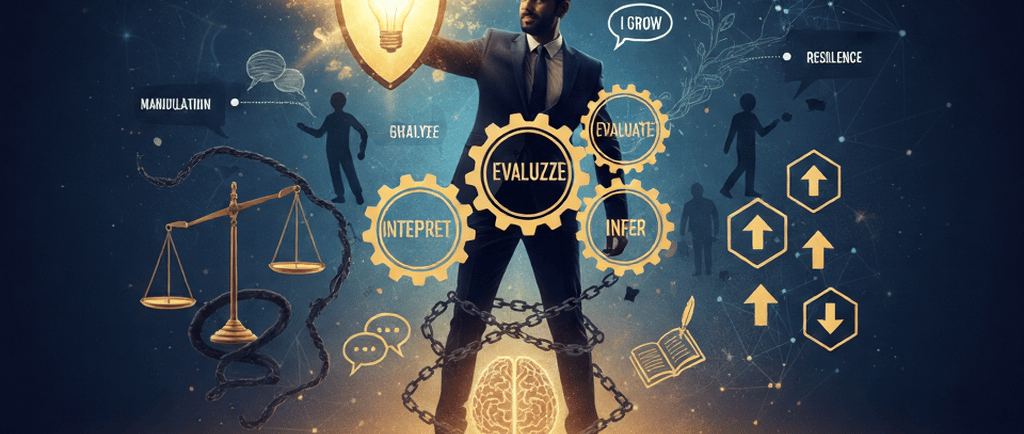
There are several key components involved in the process of critical thinking. First, interpretation involves fully comprehending the information presented, while analysis refers to breaking down complex information into smaller, manageable parts. This step is crucial as it forms the basis for subsequent evaluation. Additionally, evaluation entails assessing and judging the credibility and relevance of the information, leading to an informed conclusion. Furthermore, inference is the process of drawing logical conclusions from the available evidence. Finally, explanation requires articulating reasoning clearly and justifying one’s conclusions.
These components work collaboratively, originating from a foundation of open-mindedness. A critical thinker must be willing to consider different viewpoints and perspectives. By developing robust critical thinking skills, individuals gain the ability to approach challenges methodically, facilitating better personal and professional outcomes. Through this multifaceted skill set, critical thinking becomes not only a tool for decision-making but also a vital component of personal empowerment.
The Impact of External Influences on Your Life
External influences significantly shape an individual's perspective, often impacting personal happiness and decision-making processes. In a world where societal expectations are prevalent, individuals frequently find themselves conforming to predefined standards. These expectations may stem from cultural norms, family pressures, or professional demands, ultimately placing constraints on personal growth. As a result, one’s sense of self can become entangled with the opinions of others, which can inhibit authentic happiness.
Moreover, relationships play a crucial role in our lives, acting as both supporting pillars and potential sources of pressure. Friends, family members, and colleagues can profoundly influence our decisions—sometimes, leading us to prioritize their needs over our own desires. This dynamic can create inner conflict, where the desire to maintain harmony in relationships might prompt individuals to make choices that are not aligned with their true selves. It is imperative that one employs critical thinking skills to navigate these complexities, allowing for an informed assessment of relationship influences.
Negative external forces, such as social media and peer pressure, further complicate the landscape of personal empowerment. The constant exposure to curated images and lifestyles can foster unrealistic expectations, causing dissatisfaction and self-doubt. It is essential to recognize these influences and cultivate an awareness that enables individuals to step back and critically evaluate the information and messages they absorb. Developing a practice of critical thinking allows individuals to discern which external influences can positively contribute to their lives and which should be actively minimized.
Recognizing Manipulative Behaviors
Manipulative behaviors are tactics used by individuals to influence others, often through deceptive or coercive means, aimed at gaining control or achieving selfish goals. Recognizing these behaviors is crucial for personal empowerment, as it allows individuals to safeguard their happiness and pursue their personal goals without external pressures. One common example of manipulative behavior is gaslighting, where an individual attempts to make another doubt their own perceptions or emotions. This tactic can undermine self-worth and lead to psychological distress, making it difficult for victims to trust their instincts.
Another manipulative behavior is excessive flattery, often seen in relationships where one party seeks to gain favor or compliance through compliments and praise. While compliments can be genuine, when overused, they can indicate an ulterior motive to sway decision-making or gain influence. Covert aggression, characterized by passive-aggressive remarks, sarcasm, or sulking, can also manipulate others by making them feel guilty or responsible for the aggressor's discontent.
Emotional blackmail is another damaging form of manipulation, where one party uses threats of emotional harm to control another’s actions or decisions. Phrases like "If you really cared, you would..." create a sense of obligation, which can lead to compromised personal values and goals. These behaviors are often subtle, making them hard to identify until they have taken a significant toll on one's mental health.
Awareness of these manipulative tactics is the first step toward asserting oneself and establishing personal boundaries. By learning to recognize and address manipulative behaviors effectively, individuals can enhance their critical thinking skills, leading to empowered decision-making that is aligned with their true desires and goals. Being vigilant allows for healthier relationships and a more fulfilling life devoid of undue influence.
Developing Your Critical Thinking Skills
Enhancing your critical thinking skills requires a deliberate approach, incorporating practical exercises, methodologies, and mindset modifications that encourage analytical thought processes. To embark on this journey, begin by fostering an inquisitive mindset; ask questions about everything you encounter, whether in educational settings, professional environments, or daily interactions. Cultivating a habit of questioning will not only develop your analytical abilities but will also help you understand various perspectives.
Next, engage in reflective thinking. After experiencing a significant situation, take a moment to analyze the outcomes and your responses. What worked well? What could have been improved? This practice hones your ability to assess situations critically and encourages growth. You might also consider maintaining a journal dedicated to your reflections, which serves as a valuable tool for tracking your progress and thoughts over time.
Additionally, participating in debates or discussions can significantly enhance your critical thinking capabilities. By arguing different points of view on a subject, you force yourself to consider various angles, strengthening your ability to analyze arguments effectively. When faced with opposing viewpoints, try to detach your personal beliefs and assess the arguments based on logic and evidence.
Finally, consider immersing yourself in diverse reading materials. Literature across various genres, including non-fiction, philosophy, and science, provides rich content for analysis. As you read, practice summarizing and critiquing the content, identifying biases, supporting evidence, and drawing conclusions based on the material.
Incorporating these strategies into your daily life can lead to significant improvements in your critical thinking abilities. As you practice and refine these skills, you will find yourself better equipped to navigate complex scenarios, make informed decisions, and engage intellectually with others effectively.
Applying Critical Thinking in Daily Life
Critical thinking is not merely an academic skill but a vital tool that can be applied to various scenarios in everyday life. By incorporating critical thinking into personal decisions and workplace situations, individuals can enhance their problem-solving capabilities and make more informed choices. The following examples illustrate how one can implement critical analysis effectively.
In personal decision-making, critical thinking encourages individuals to evaluate options logically rather than be guided solely by emotions or peer influence. For instance, when faced with a significant financial decision, one should gather relevant data regarding the investment opportunity. This involves researching potential risks and benefits, analyzing market trends, and weighing short-term versus long-term impacts. By critically assessing this information, individuals can derive a rationale that aligns with their financial goals and personal values.
In the workplace, critical thinking plays a crucial role in team dynamics and project management. For example, during a project brainstorming session, applying critical thinking means not just generating ideas but also questioning their feasibility and relevance. Colleagues can engage in discussions that challenge assumptions and explore alternative solutions. By fostering a culture of critical analysis, teams can prevent groupthink, which often leads to suboptimal decisions. Evaluating feedback, questioning claims, and supporting conclusions with evidence enhances the quality of the outcomes.
Moreover, critical thinking facilitates better conflict resolution. When disagreements arise, individuals who utilize critical analysis are better equipped to understand diverse perspectives and find common ground. Instead of reacting defensively, they can assess the issues at hand, examining the underlying causes before proposing compromises or solutions.
Overall, applying critical thinking in daily life enriches personal empowerment by equipping individuals with the skills necessary to navigate complex situations effectively. By practicing critical analysis in various scenarios, one can foster a deeper understanding of both themselves and the world around them, ultimately leading to improved decision-making and well-being.
Building Resilience Against Negative Influences
In our fast-paced world, individuals often encounter various negative influences that can impede personal happiness and growth. Building resilience is vital for fostering an empowered mindset, allowing individuals to navigate challenges effectively. One of the most effective strategies for enhancing resilience is the establishment of personal boundaries. By clearly defining what is acceptable and what is not in interpersonal relationships, individuals can protect their mental and emotional well-being. This approach ensures that personal values are maintained and helps in mitigating the impact of external negativity.
Another powerful tool for building resilience is the practice of positive affirmations. These affirmations can serve as daily reminders of one’s strength, capabilities, and worth. When individuals engage in positive self-talk, they reinforce their self-esteem and counteract any negative messages they may receive from others or from their environment. Regularly practicing affirmations can shift mindsets, enabling individuals to focus on their strengths rather than their vulnerabilities.
Moreover, cultivating a community of support can significantly bolster resilience. Surrounding oneself with positive and uplifting individuals fosters a sense of belonging and reinforces a mindset focused on growth and positivity. Supportive relationships can provide encouragement during tough times, creating a buffer against the detrimental effects of negativity.
It is equally important to engage in self-care practices, as these are essential for maintaining mental health. Activities such as mindfulness meditation, regular exercise, and pursuing hobbies can create a well-rounded approach to emotional stability. By making positive lifestyle choices, individuals can enhance their resilience, further empowering themselves to withstand negative influences.
In summary, the journey toward personal empowerment requires robust resilience against negative influences. By setting boundaries, practicing positive affirmations, cultivating supportive relationships, and prioritizing self-care, individuals can safeguard their happiness and maintain a steadfast outlook amidst life’s challenges.
Living a Fulfilled Life Through Critical Thinking
Engaging in critical thinking is fundamentally about making informed decisions that enhance our personal empowerment and overall well-being. By cultivating the ability to analyze situations logically and question assumptions, individuals position themselves to lead a more fulfilled life. This approach not only applies to major decisions but spills into daily choices as well, creating a ripple effect that fosters self-confidence and autonomy.
At its core, critical thinking equips individuals with the tools needed to evaluate various perspectives and assess the validity of the information they encounter. Such skills encourage open-mindedness, which is essential for personal growth. By deliberating on different viewpoints and weighing their merits, one can better align their choices with their values and aspirations. This self-directed approach empowers individuals to define their own paths rather than allowing external influences to dictate their destinies.
Furthermore, the practice of critical thinking can lead to enhanced problem-solving abilities. When confronted with obstacles, a person skilled in critical analysis is likely to devise creative solutions rather than succumb to frustration. This resilience is a key component of personal fulfillment, as it enables individuals to view challenges as opportunities for growth rather than insurmountable barriers.
Lead a life characterized by intentionality rather than reaction. By consistently applying critical thinking, individuals can systematically reflect on their experiences, recognize patterns, and adjust their strategies. Such reflexive practices ensure that they remain aligned with their long-term goals and desires.
Ultimately, integrating critical thinking into daily life can result in profound transformations. Individuals who embrace this method are more capable of navigating life's complexities with a sense of agency and confidence. The outcome is a more empowered existence, enriched with purpose and fulfillment.
Contact
Let's connect and grow your digital presence.
Phone
info@shobhitgoyal.com
+918103354280
© 2025. All rights reserved.
UDYAM REGISTRATION NUMBER :- UDYAM-MP-49-0093568