Effective Strategies for Managing Business Finances
Financial management is a critical aspect of any organization, playing a vital role in determining its success and sustainability. At its core, it involves the strategic planning, organizing, directing, and controlling of financial activities such as procurement and utilization of funds. Effective financial management influences important dimensions of a business including growth, operational efficiency, and stability.
Shobhit Goyal
2/7/20267 min read
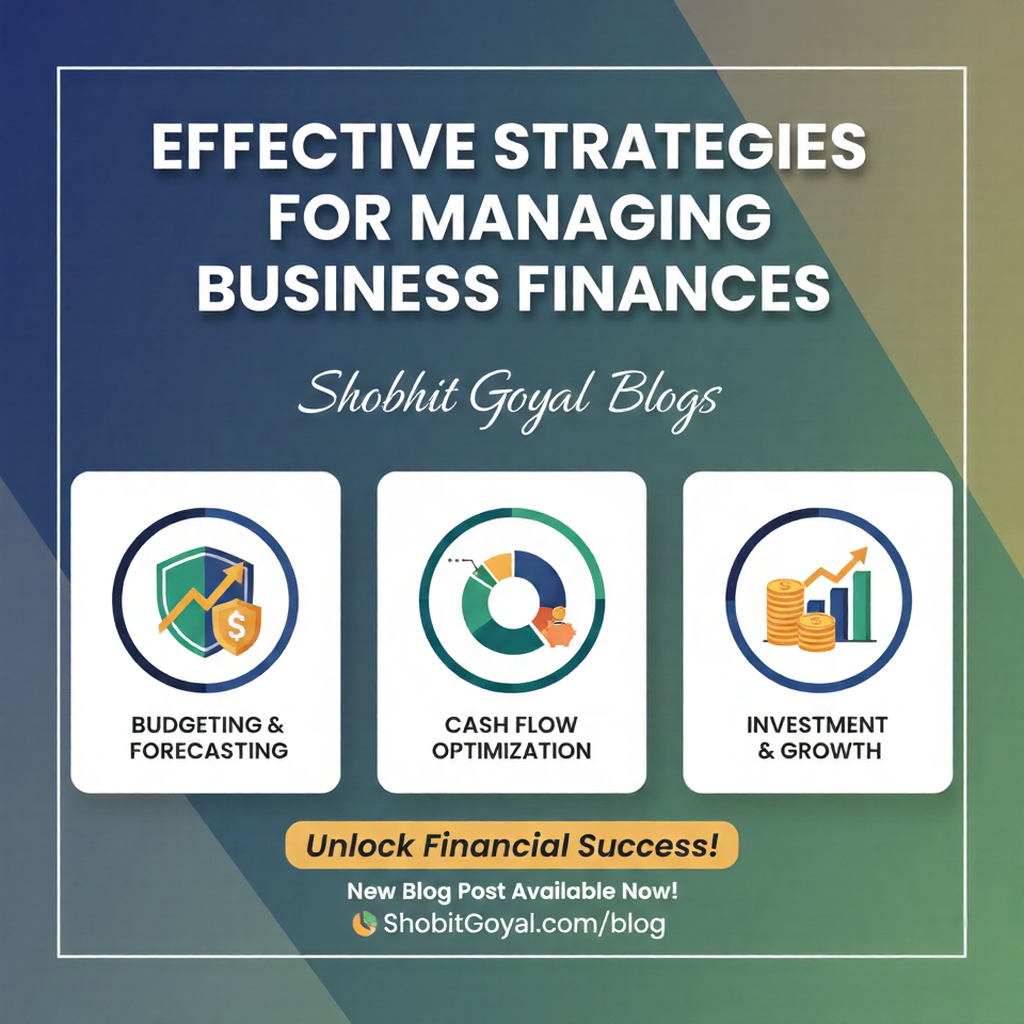

Understanding the Importance of Financial Management in Business
Financial management is a critical aspect of any organization, playing a vital role in determining its success and sustainability. At its core, it involves the strategic planning, organizing, directing, and controlling of financial activities such as procurement and utilization of funds. Effective financial management influences important dimensions of a business including growth, operational efficiency, and stability.
One of the key components that underscores the importance of financial management is cash flow management. The ability to monitor and manage cash inflows and outflows ensures that a business can meet its obligations and avoid insolvency. A positive cash flow indicates that the business has sufficient liquidity to cover operational costs, invest in growth opportunities, and navigate unexpected challenges. Conversely, poor cash flow management can lead to significant disruptions and hinder a company’s overall performance.
Budgeting is another essential element of financial management. A well-structured budget serves as a roadmap for business operations, helping organizations allocate resources effectively and prioritize spending. It provides insights into revenue expectations, costs, and potential areas for investment, enabling informed decision-making. Moreover, regular budget evaluations allow a business to adapt to changing economic conditions, ensuring that it remains agile and responsive to market dynamics.
In addition, financial forecasting plays a crucial role in strategic planning. By analyzing historical data and current market trends, businesses can make predictions regarding future revenues and expenses. This forward-looking perspective aids in setting achievable goals and identifying potential financial pitfalls. With accurate forecasting, organizations are better equipped to implement strategies that promote growth while minimizing risks.
In conclusion, the effective management of finances is essential for the sustainable success of any business. Understanding financial management's critical elements—such as cash flow, budgeting, and forecasting—provides a foundation for implementing robust financial strategies that support long-term objectives.
Common Financial Challenges Faced by Businesses
Businesses, regardless of their size or industry, frequently encounter various financial challenges that can hinder their growth and sustainability. Among the most prevalent issues is cash flow management. Inadequate cash flow can arise from delayed payments from clients or insufficient sales, leading to difficulties in meeting operational expenses. For instance, a small construction company may find itself in a tight spot when clients postpone their project payments, putting pressure on the firm to cover payroll and supplier bills. Thus, maintaining a steady cash flow is critical for any business.
Another common financial hurdle is unexpected expenses. Businesses often face unforeseen financial burdens, such as equipment breakdowns, legal disputes, or sudden increases in raw material costs. For example, a restaurant may need to invest unexpectedly in repairs for their kitchen equipment, which can strain their finances if they have not allocated funds for emergencies. Such surprises can severely disrupt a company's financial equilibrium, making it essential for business owners to implement proper budgeting and maintain an emergency fund.
Furthermore, generating revenue can be a significant obstacle for many enterprises, particularly startups or those in highly competitive industries. A tech startup, for example, may struggle to convert initial technological innovation into consistent customer demand and therefore revenues. Without effective marketing strategies and customer engagement, businesses can quickly find themselves in financial jeopardy. This underscores the importance of proactive financial planning, as forecasting potential revenue and expenses allows businesses to better navigate these challenges.
In summary, common financial challenges such as cash flow issues, unexpected expenses, and difficulties in revenue generation require vigilant planning and management. By addressing these potential problems ahead of time, businesses can enhance their resilience and ability to thrive in an ever-changing market.
Creating a Comprehensive Budget for Your Business
Creating a comprehensive budget for your business is crucial to ensuring financial stability and facilitating informed decision-making. A well-structured budget provides a roadmap that outlines expected income and expenses, thus guiding the business's financial activities. The first step in this process entails determining the type of budget that best suits your business needs. Common types include fixed budgets, which remain unchanged regardless of revenue variation; flexible budgets, which adjust according to changes in business activity; and rolling budgets, which are continuously updated and provide ongoing forecasts.
To begin the budgeting process, businesses must first estimate their income. This estimation should be based on historical sales data, market trends, and realistic growth projections. Identifying all revenue streams is essential, as it ensures a comprehensive understanding of potential earnings. Once income has been projected, the next step involves estimating expenses. Expenses can be categorized into fixed costs, such as rent and salaries, and variable costs, like utilities and raw materials. Accurately tracking these expenses is vital for an effective budgeting strategy.
After drafting the initial budget, it is important for business owners to regularly review and adjust the budget according to evolving circumstances. This may include changes in market conditions, unexpected expenses, or shifts in business priorities. Regular evaluations ensure that the budget remains relevant and effective in meeting the business’s financial goals. Ultimately, effective budgeting acts as a significant tool in managing business finances, fostering better cash flow management, and aiding in strategic planning. By adopting these strategies, businesses can create a budget that not only reflects their financial landscape but also adapts to their ongoing needs.
Utilizing Technology for Financial Management
In the modern business landscape, technology plays a pivotal role in effective financial management. With the advent of sophisticated financial management tools and software, businesses can streamline their financial processes, enhance accuracy, and make informed decisions based on real-time data analysis.
One popular category of financial management tools is accounting software. Programs such as QuickBooks, FreshBooks, and Xero provide businesses with capabilities to automate their financial reporting and invoicing. These software solutions can assist in tracking expenses, managing payroll, and generating financial statements, allowing organizations to save time and reduce the risk of human error associated with traditional bookkeeping.
Additionally, cash flow management tools like Float and Pulse facilitate the monitoring of cash inflows and outflows, which is crucial for maintaining financial stability. These tools help businesses forecast their cash requirements, ensuring that they have adequate funds to meet obligations while also identifying potential shortfalls ahead of time. Automated alerts and insights generated through these platforms can guide businesses in making strategic financial decisions.
Automation in financial management not only enhances efficiency but also minimizes errors that may arise from manual data entry. Integration of technology allows for seamless synchronization across various financial systems. For instance, connecting accounting software with payment processing platforms can ensure accurate real-time tracking of financial transactions, leading to a holistic view of the company’s financial health.
In summary, the effective utilization of technology in financial management empowers businesses to efficiently track their finances, analyze data rigorously, and ultimately improve decision-making capabilities. By incorporating advanced financial tools and automating processes, companies can adapt to the dynamic economic environment and position themselves for sustained growth.
Effective Cash Flow Management Techniques
Maintaining a positive cash flow is vital for the smooth operation of any business. One effective technique is managing invoices efficiently. Timely invoicing ensures that clients are reminded of their financial obligations promptly. Automating the invoicing process can reduce errors and delays, thereby improving the speed at which funds are collected. Moreover, offering early payment discounts can encourage customers to settle their accounts sooner, leading to an enhanced cash flow position.
Setting clear payment terms with customers is another crucial aspect of cash flow management. Clearly defined terms not only establish expectations for payment timing but also help in negotiating terms that align with the business’s financial requirements. For instance, businesses may require shorter payment terms for projects with higher costs, while maintaining flexibility for long-term clients who may need extended terms.
Efficient inventory management is also essential for maintaining a healthy cash flow. By monitoring inventory levels closely and practicing just-in-time inventory management, businesses can minimize excess stock and reduce holding costs. This approach ensures that capital is not tied up in unsold goods, allowing funds to remain available for operational expenses.
Furthermore, forecasting cash flow based on historical data aids businesses in anticipating cash shortages and surpluses. By analyzing past financial trends, organizations can make informed decisions about future expenditures and investments. This proactive approach enables businesses to prepare for fluctuating cash flow levels and adjust their strategies accordingly, thus promoting resilience against unforeseen financial challenges.
Strategies for Reducing Costs and Maximizing Profits
In today’s competitive business environment, managing finances effectively is crucial for success. One of the most effective approaches to enhance profitability is by adopting cost-reduction strategies that do not compromise the quality of products or services. A balanced approach is essential in achieving financial management goals.
One robust strategy involves negotiating with suppliers to secure better terms. Building strong relationships with suppliers can lead to discounts, improved payment terms, and other advantageous arrangements. Engaging in regular discussions about pricing and exploring bulk purchasing options can substantially reduce costs. It's important for businesses to routinely analyze supplier contracts to ensure they are receiving the best possible deals.
Another strategy is outsourcing non-core functions. Outsourcing allows businesses to maintain focus on their primary operations while delegating tasks like payroll, customer service, or IT to specialized firms. This approach not only reduces overhead costs but also enhances efficiency, as outsourced companies often operate with greater expertise and resources. Evaluating which functions are essential versus those that can be handled externally can yield significant savings without sacrificing quality.
Streamlining operations is a critical tactic for cost control and maximizing profits. Businesses can analyze and re-engineer workflows to eliminate inefficiencies and redundancies. Implementing technology solutions, such as automation tools, can help businesses reduce labor costs and enhance productivity. Furthermore, adopting lean management principles can foster a culture of continuous improvement, allowing organizations to consistently seek methods for reducing waste.
In conclusion, implementing effective strategies for reducing costs and maximizing profits requires a multifaceted approach. By negotiating with suppliers, outsourcing non-core functions, and streamlining operations, businesses can achieve enhanced profitability while maintaining high standards of quality.
Evaluating Financial Performance and Making Informed Decisions
Assessing financial performance is crucial for any business aiming to thrive in a competitive landscape. By leveraging various metrics and key performance indicators (KPIs), organizations can gauge their financial health and make informed, strategic decisions. A central focus is on understanding profit margins, which reveal how much profit a company retains from its sales after accounting for costs. Monitoring gross, operating, and net profit margins helps businesses pinpoint areas for improvement and sustainability.
Another significant metric is the return on investment (ROI), a vital tool that quantifies the efficiency of an investment relative to its cost. Calculating ROI enables businesses to evaluate the profitability of their expenditures and strategic initiatives. When assessing different projects or investments, prioritizing those with a higher ROI fosters improved resource allocation and enhances overall financial performance.
Additionally, analyzing other financial ratios, such as the current ratio and debt-to-equity ratio, provides further insights into a company's liquidity and financial leverage. These ratios facilitate a deeper understanding of short-term solvency and the proportion of debt utilized to finance assets, respectively. By continuously monitoring these financial indicators, businesses can proactively identify trends in their financial health, aiding in strategic planning and risk assessment.
Moreover, the importance of making decisions rooted in financial data cannot be overstated. Utilizing trends and insights from financial performance metrics empowers businesses to adapt swiftly to market changes, ensuring alignment with overall organizational goals. A data-driven approach to decision-making not only minimizes risks but also equips management with the foresight needed to capitalize on emerging opportunities. By embedding these financial evaluations into their operations, firms establish a foundation for sustainable growth and long-term success.
Contact
Let's connect and grow your digital presence.
Phone
info@shobhitgoyal.com
+918103354280
© 2025. All rights reserved.
UDYAM REGISTRATION NUMBER :- UDYAM-MP-49-0093568