Understanding Internet Networks: The Backbone of Modern Communication
The Internet is often described as a vast network of interconnected devices and systems that facilitates communication, information exchange, and access to a myriad of online services. It is a fundamental component of modern society, influencing aspects ranging from personal connections to global business operations. At its core, the Internet operates on a set of standardized communication protocols that enable different devices to connect and share data, effectively creating a digital ecosystem.
Shobhit Goyal
1/24/20268 min read
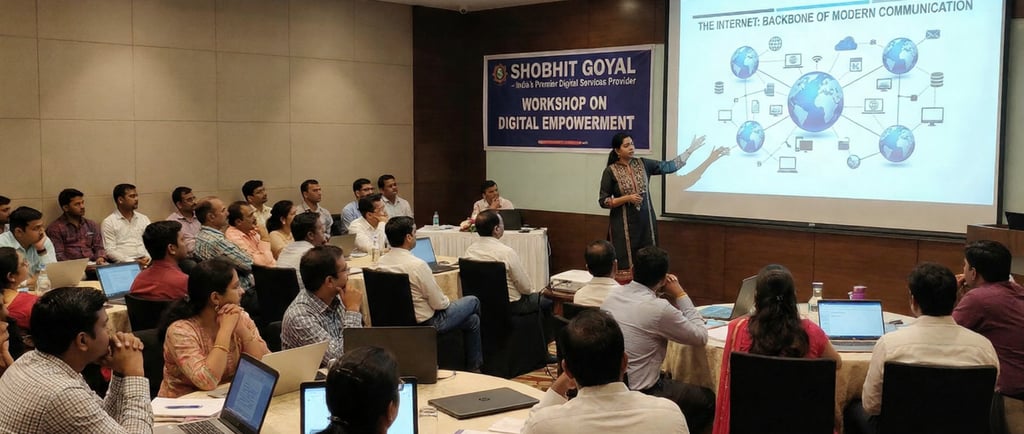

What is the Internet?
The Internet is often described as a vast network of interconnected devices and systems that facilitates communication, information exchange, and access to a myriad of online services. It is a fundamental component of modern society, influencing aspects ranging from personal connections to global business operations. At its core, the Internet operates on a set of standardized communication protocols that enable different devices to connect and share data, effectively creating a digital ecosystem.
To understand the Internet, it is essential to be familiar with some key terms. An IP address, or Internet Protocol address, is a unique numerical label assigned to each device connected to the Internet. This identifier ensures that data packets reach their intended destination, functioning similar to a mailing address in the physical world. Another critical term is URL, which stands for Uniform Resource Locator. A URL is the specific address used to access resources, guiding users to the correct websites or files within the vast digital space.
The concept of domains is also significant in describing the Internet's structure. A domain is a human-readable string that corresponds to an IP address, making it easier for users to navigate online. For instance, the domain "www.example.com" can be translated into a set of numerical coordinates that identify a specific server on the Internet. This user-friendly naming system has played an essential role in the Internet's accessibility and growth.
In summary, the Internet serves as a pivotal framework in the digital age, connecting billions of devices and facilitating seamless communication and information distribution. It is the foundation upon which many aspects of contemporary life and global commerce rely, making its understanding crucial in our increasingly connected world.
How Does the Internet Work?
The Internet operates as a vast network of interconnected computing devices that communicate with each other using a standardized set of protocols. Understanding how the Internet works involves delving into key technologies, primarily the Transmission Control Protocol (TCP) and the Internet Protocol (IP). Together, these protocols facilitate the transfer of data packets across diverse networks, ultimately allowing for seamless communication.
The Internet Protocol (IP) is responsible for addressing and routing data to ensure packets reach their designated destinations. Each device connected to the Internet is assigned a unique IP address, which acts as its identifier. When data is sent over the Internet, it is broken down into smaller units known as packets. Each of these packets contains both the sender's IP address and the recipient's IP address, enabling routers to determine the optimal path for delivery.
Transmission Control Protocol (TCP) complements IP by providing a reliable communication method. Unlike the simpler User Datagram Protocol (UDP), which sends packets without ensuring delivery, TCP establishes a connection and guarantees that packets arrive intact and in the correct order. This is achieved through a process of acknowledgment, where the recipient confirms receipt of packets back to the sender.
Routers and switches play a vital role in this framework. Routers direct the flow of data between networks by determining the best path for packets based on various factors, including traffic conditions and network topology. Switches operate on a local level within networks, managing data packets between devices within the same local area network (LAN).
Through this complex interplay of protocols and devices, data can travel swiftly and efficiently across the globe, enabling myriad applications and services that define modern communication. The understanding of these foundational technologies is essential for grasping the broader implications of Internet connectivity and the future of digital communication.
Understanding Networking Concepts
Networking forms the foundation of modern communication, enabling devices to connect and share information seamlessly. A critical aspect of networking is distinguishing between Local Area Networks (LAN) and Wide Area Networks (WAN). A LAN typically encompasses a limited geographic area, such as a single building or campus, allowing high-speed communication between connected devices. Conversely, a WAN spans a much larger area, often connecting multiple LANs across cities or countries, and is usually facilitated by leased telecommunication lines.
Another essential component of networking is broadband, which refers to high-capacity transmission techniques that facilitate a wide range of frequencies, allowing simultaneous data transmissions. Broadband is central to Internet connectivity, ensuring users can engage with online services without significant interruptions.
In addition to understanding LAN, WAN, and broadband, familiarity with network topologies is vital. Star topology, for instance, connects all devices to a central hub, significantly enhancing reliability. In a mesh topology, each node interlinks with multiple others, providing robust redundancy which is advantageous for performance. Meanwhile, a bus topology connects devices to a single communication line, which can lead to performance bottlenecks as traffic increases.
Networking can be categorized into wired and wireless types. Wired networks generally offer more stable connections and higher bandwidth, while wireless networks provide greater flexibility and mobility, at the cost of some performance efficiency. The significance of bandwidth cannot be overstated, as it determines the volume of data that can be transmitted over a network in a given time frame. On the other hand, latency refers to the delay before a transfer of data begins following an instruction, which affects user experience.
Types of Internet Connections
In today's digital age, understanding the various types of internet connections is essential for both consumers and businesses seeking reliable communication solutions. Each connection type comes with its unique advantages and disadvantages, influencing factors such as speed, reliability, availability, and overall cost.
One of the most advanced forms of internet connectivity is fiber optic technology. Utilizing strands of glass fibers, fiber optic connections deliver extremely high-speed internet with low latency. This makes it ideal for bandwidth-intensive activities such as streaming or online gaming. Although fiber optic is rapidly expanding, availability is still limited in some regions, potentially making it less accessible than other options.
DSL (Digital Subscriber Line) is another popular choice, leveraging existing telephone lines to provide internet service. While generally more affordable than fiber, DSL speeds can vary significantly based on the distance from the provider’s central office. It is widely available, but users in rural areas may experience slower speeds or less consistent service.
Cable internet offers another alternative, using coaxial cables typically associated with cable television. It provides faster speeds than DSL, especially during peak usage times when cable customers share bandwidth. However, availability is also tied to the presence of cable infrastructure, and users can experience fluctuations in speed during busy hours.
For areas lacking traditional wired services, satellite internet presents a viable option. It functions by connecting to satellites circling the Earth, offering coverage even in remote locations. However, high latency and weather-related interruptions can lead to limitations in performance.
Emerging technologies, such as 5G, are poised to revolutionize internet connectivity. With the ability to deliver lightning-fast speeds and support a multitude of devices simultaneously, 5G has the potential to bridge the gaps left by previous technologies. As infrastructure continues to develop, the impact of 5G will likely drastically enhance user experiences in various digital applications.
Internet Security and Privacy
As individuals increasingly rely on the internet for daily activities, understanding internet security and privacy becomes essential. The digital landscape is rife with threats such as malware, phishing scams, and data breaches, which can compromise personal information and undermine overall safety online. Malware, which includes various forms of malicious software, can infiltrate devices without the user’s knowledge, leading to data loss and unauthorized access to sensitive information. Phishing schemes, on the other hand, typically involve fraudulent emails or messages designed to trick individuals into providing personal data, often masquerading as trustworthy sources.
Data breaches are a serious concern for both individuals and organizations, allowing cybercriminals to gain access to confidential data. Once obtained, this information can result in identity theft or financial loss, making it imperative to take preventive measures. One effective method to enhance online security is the use of a Virtual Private Network (VPN). A VPN encrypts internet traffic, providing a secure tunnel for data exchange and masking the user’s IP address, thereby enhancing privacy.
Additionally, employing firewalls can help monitor and control incoming and outgoing network traffic, further securing devices from unauthorized access. On personal devices, incorporating reliable antivirus software can effectively detect and neutralize malware before it can cause significant harm. Regularly updating this software ensures the latest threats are met with the most current defenses.
Best practices to protect personal information online also include using strong, unique passwords for each account and enabling two-factor authentication wherever possible. By adopting robust security measures, users can significantly mitigate risks associated with internet usage, fostering a safer online environment. Awareness and implementation of these strategies can empower individuals to navigate the digital world with confidence.
Future Trends in Internet Networking
The future of internet networking is poised for significant transformation driven by technological advancements and evolving user demands. One of the most prominent trends is the proliferation of the Internet of Things (IoT). As more devices connect to the internet, the need for robust, scalable networks becomes crucial. IoT not only increases the number of devices communicating but also necessitates advanced data management to facilitate real-time analytics and decision-making without compromising security.
Another exciting development is the integration of artificial intelligence (AI) in network management. AI algorithms can enhance network performance by predicting congestion and optimizing traffic flow. This proactive management reduces downtime and increases efficiency, providing a smoother experience for users. Furthermore, AI-driven tools can automatically adjust bandwidth allocation based on demand, thereby enhancing the overall quality of service across diverse applications.
Upcoming protocols play a vital role in shaping internet networking's future. IPv6, for example, is becoming increasingly important as the number of connected devices exceeds the capabilities of IPv4. The transition to IPv6 will support a vast number of unique IP addresses, enabling a seamless connection for more devices and improving internet accessibility. Additionally, new protocols are being developed to enhance security and improve data transmission speed, which are essential as cyber threats continue to evolve alongside technology.
As we look towards the future, we can expect that advancements in IoT, AI, and networking protocols will converge to create a more connected and efficient internet. This evolution promises to enhance not only personal connectivity but also the infrastructure necessary for businesses, governments, and communities to thrive in an increasingly digital world.
Frequently Asked Questions (FAQs)
In today's digital age, queries regarding Internet connectivity and networking are commonplace. This section addresses some of the most frequently asked questions to provide clarity for users.
What is the role of an Internet service provider (ISP)? An Internet service provider (ISP) is a company that offers individuals and organizations access to the Internet. ISPs handle the connectivity necessary for users to interact with the web by providing the required infrastructure and technology. They facilitate data transmission and may also offer additional services, including email, web hosting, and security features.
How does one secure a home network? Securing a home network is crucial to protect sensitive information from unauthorized access. Basic steps include changing the default administrator username and password, enabling network encryption through WPA3, regularly updating firmware on routers, and utilizing a strong, unique Wi-Fi password. Additionally, users can implement firewall settings and regularly check connected devices to ensure no unauthorized access occurs.
What is bandwidth, and why is it important? Bandwidth refers to the maximum rate of data transfer across a network path, typically measured in megabits per second (Mbps). It is essential as it determines the speed and quality of Internet connectivity, affecting download and upload speeds. Higher bandwidth allows multiple devices to connect simultaneously and supports activities that require greater data usage such as streaming videos or online gaming.
How can I improve my Internet speed? To enhance Internet speed, users can take several measures. These may include upgrading their Internet plan with their ISP, optimizing router placement to reduce distance and interference, using Ethernet connections for devices requiring stable access, and minimizing the number of concurrent connections to the network. Additionally, clearing cache and optimizing device settings can contribute to better performance.
Contact
Let's connect and grow your digital presence.
Phone
info@shobhitgoyal.com
+918103354280
© 2025. All rights reserved.
UDYAM REGISTRATION NUMBER :- UDYAM-MP-49-0093568